
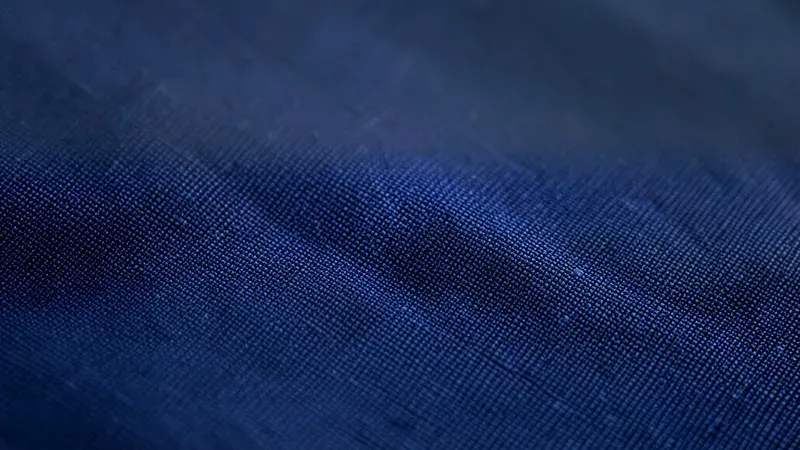
TC and TR are both main uniform fabrics. TC combines polyester and cotton, while TR combines polyester and rayon. For an office uniform, specify what the garment needs to do, how to approve the shade, and how the team will wash it.
Roles and wear requirements
Office teams have different garment requirements — reception and guest-facing roles, staff in the main office, and teams that need the garment to look sharp in the lobby. Each role needs different requirements: weight, construction, comfort in wear, and the care requirements of that team.
Specify in the order:
- Fabric type and fibre (TC or TR)
- Weight (g/m²) and construction (plain, twill, dobby)
- Garment type and cut that fits the role
- The team's actual wash protocol
- An approved colour or sample
For the general uniform guide, see Uniform fabric — choosing and for the cotton-vs-blend comparison, see Cotton vs blends
TC or TR for the office
BCI’s TR uniform fabrics are typically heavier and softer than its TC uniform fabrics. Compare swatches of both blends at your target weight and construction. For frequently washed uniforms, ask for the relevant test results on the fabric you intend to order.
Use the garment requirements to compare actual swatches:
- Compare the surface and hand of both blends.
- Check performance against the laundering method the team uses.
- Approve a representative finished sample.
Shade approval and production
Every dyeing job starts with a colour spec, a sample or a standard colour from BCI's swatch cards:
- Send a colour reference or choose a standard BCI swatch.
- Review the lab dip for shade before bulk production.
- BCI checks bulk shade against the approved reference.
BCI’s colour lab uses a spectrophotometer. Bulk shade is checked against the approved reference.
Use the lab dip to approve the shade. Assess fabric properties on a representative finished swatch.
The team's actual wash protocol
Tell the mill whether the team will wash uniforms at home or send them to a laundry.
- Tell the mill the washing temperature, detergent and drying process used in practice.
- ISO 6330 specifies domestic test procedures. If using an industrial laundry, agree on a representative method with the laundry and the mill.
- For colourfastness to laundering, confirm the ISO 105-C06 method to use. For dimensional change, specify the appropriate washing and drying procedure alongside ISO 5077.
- Agree which results and acceptance criteria to include in the order.
BCI quality control
BCI has three checkpoints: greige inspection before dyeing, in-process control and inspection at packing. BCI provides a 10-point system quality report for every lot.
The in-house lab tests to ISO, JIS, AATCC and Daimaru methods. Confirm the method and reporting requirements for your order.
Ordering
Before ordering office uniform fabric:
- Specify fibre (TC or TR), weight (g/m²) and construction (plain, twill, dobby)
- Send the colour spec or sample, or select a standard colour from BCI's swatch cards
- Request a lab dip before production and a fabric sample with a test report that meets the spec
- Specify quantity and order terms directly with BCI — no fixed numbers
Worth knowing: the minimum order (MOQ) is negotiable and agreed per fabric and shade — no fixed number.
Frequently asked questions
Should office uniforms use TC or TR? Both are polyester blends; TC blends cotton and TR blends rayon. The choice should weigh the role, weight, comfort and the way the team actually washes — not trend.
How do TC and TR differ? TC blends polyester with cotton and TR blends polyester with rayon. The TR fabrics BCI produces are usually heavier and softer than its TC fabrics.
How do I approve the shade? Use the lab dip before production. BCI checks bulk shade against the approved reference.
What should I specify for wash testing? Agree on the wash conditions, required test method and acceptance criteria with BCI before ordering.
How do I specify a colour for the mill? Send a colour spec or sample, or select a standard colour from BCI's swatch cards.
Talk to BCI
Offices that need TC or TR uniform fabric can see the details at Uniform Fabrics or contact the team via Contact us