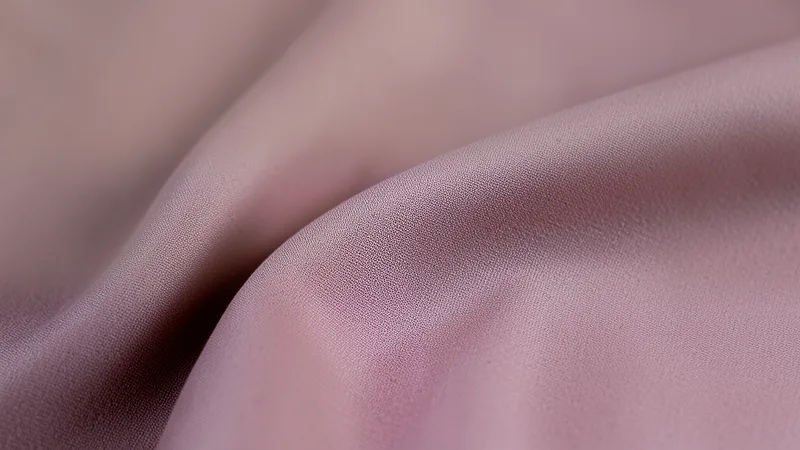
Short answer: what is rayon fabric?
Conventional viscose is a regenerated cellulose fibre. Viscose fabrics are often chosen for their soft feel and drape. This guide covers how to name the fibre and what to ask the dyehouse before ordering.
What rayon is, and naming by standards
In the US, 16 CFR 303.7 defines rayon as a manufactured fibre made from regenerated cellulose. In the EU, Regulation (EU) No 1007/2011 lists viscose as regenerated cellulose made by the viscose process, in filament or staple form.
Names by region:
- Rayon: a generic name used in US textile labelling.
- Viscose: the term used in the EU labelling standard and for the process that produces the fibre
- Modal and lyocell: generic names for other regenerated cellulose fibres produced by different processes
- TENCEL™: a Lenzing brand for fibres including lyocell and modal.
How rayon is made
The viscose process converts purified cellulose pulp into a spinning solution. The solution passes through fine holes into a bath to regenerate cellulose fibres.
When to choose rayon
Rayon suits work that needs softness, smoothness and drape — casual apparel, drapery and home textiles. For work needing high strength or repeated-wash durability, consider other fibres or a mixed-fibre fabric.
How to order rayon correctly
Specify conventional viscose or give the full blend composition, shade, fabric construction and intended use. Approve a lab dip for shade and request a separate finished-fabric sample to assess performance.
Key properties to know
- Soft, smooth and drapes well — suited to casual apparel and drapery
- Suits reactive dye and vat dyeing
- Shrinkage and strength depend on the fibre grade, production and use; check the actual spec and fabric sample
Dyeing rayon fabric
Reactive and vat dyes are used on cellulosic fibres. Reactive dyes form chemical bonds with cellulose. Ask the dyehouse which route suits the fabric and request colourfastness results on the finished sample.
Caring for rayon fabric
Care must follow the garment's care label, not a generic recommendation — washing, drying and cleaning depend on fibre, finish and use.
What BCI does
BCI uses reactive and vat dyes on cellulosic fabrics and specialises in vat dyeing. The colour lab uses a spectrophotometer. A lab dip is for shade approval, and bulk shade is checked against the approved reference.
The in-house lab tests fabric properties — light, water, perspiration and washing fastness, chlorine fastness, rubbing, tear/tensile strength and dimensional stability — to ISO, JIS, AATCC and Daimaru. A 10-point system quality report, a defect-scoring report, is provided for every lot.
FAQ
How does rayon differ from cotton? Both are cellulose, but rayon is regenerated and produced through a different process than cotton. Properties differ — check the actual spec and sample for the order.
How does viscose differ from modal or lyocell? They are distinct generic names for regenerated cellulose fibres. TENCEL™ is Lenzing’s brand for products including lyocell and modal. Confirm the exact fibre and assess the actual fabric.
Which dyes suit rayon? Reactive and vat dyes for cellulosic fibre. Which process fits a given job should be confirmed with the mill before ordering.
How does BCI test rayon fabric? The colour lab uses a spectrophotometer; a lab dip is for shade approval; bulk shade is checked against the approved reference; the lab checks fastness and dimension to ISO/JIS/AATCC/Daimaru, and a 10-point defect-scoring report is provided for every lot.
Does rayon shrink? Shrinkage depends on fibre grade, fabric construction and washing conditions; no single figure can be quoted from another fibre. Request a fabric sample and lab report before committing.
Can rayon be blended with other fibres? Yes. The fibre, blend and performance should be confirmed with the mill before ordering.
References
- 16 CFR 303.7 — Generic names and definitions for manufactured fibers — US Federal Trade Commission
- Regulation (EU) No 1007/2011 — EU textile fibre names (Annex I)
- The Application of Reactive Dyes to Viscose Rayon — Fowler & Preston, Journal of the Society of Dyers and Colourists (1958)
- Viscose — Textile Exchange
Talk to BCI
Rayon suits work that needs softness and drape. BCI dyes cellulosic fibre with reactive and vat dye. Learn more at Fabric Dyeing or Uniform Fabrics, or contact the team via Contact Us.