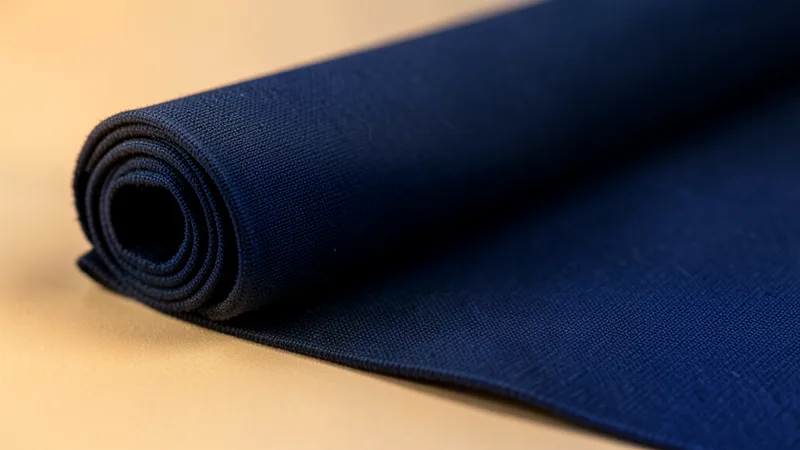
Disperse dyes are used to colour polyester. In aqueous immersion dyeing of PET, elevated temperatures help the dye enter the fibre. Some immersion processes use a carrier to assist dye uptake at a lower temperature. Ask the dyehouse to confirm the route and the colourfastness requirements for your finished fabric.
How heat and carriers affect dye uptake
Disperse dyes have low water solubility and are applied as a dispersion. Burkinshaw reviews how temperature and carriers affect dye uptake in aqueous immersion dyeing of PET. The process conditions depend on the dye and fabric.
What HT and carrier dyeing mean for a buyer
These routes describe aqueous immersion dyeing of PET. For a polyester blend, tell the dyehouse what else is in the fabric so it can confirm a suitable process and test plan.
Heat setting and thermomigration — a separate concern from dye uptake
Heating after dyeing can cause some disperse dyes to migrate toward the fibre surface. This may affect shade or colourfastness. A study on micro-polyester suede examined thermomigration after heat setting. For your order, ask for suitable tests on the finished fabric after the planned finishing steps.
What to confirm before a bulk order
- Confirm a suitable dyeing route for the actual fabric and shade.
- Agree on finished-fabric test methods and acceptance criteria. Options include ISO 105-C06 for laundering, ISO 105-B02 for artificial light, and ISO 105-X12 for rubbing.
- For blends, confirm requirements for the full fibre composition.
- The BCI in-house lab tests to ISO, JIS, AATCC and Daimaru. BCI provides a 10-point system quality report for every lot to record fabric defects. Agree separately on which colourfastness results your order requires.
- MOQ is negotiable.
FAQ
Can a carrier help dye PET at a lower temperature? Some aqueous immersion processes use a carrier to assist dye uptake at a lower temperature than high-temperature immersion dyeing. Confirm the route with the dyehouse for the proposed fabric.
Can heat setting affect colourfastness? It can. Heat can cause dye to migrate toward the surface. Ask for colourfastness test results after the fabric has been finished.
How are polyester blends dyed? Give the dyehouse the full fibre composition. It can confirm a suitable method and the tests needed for that fabric.
What should buyers ask the dyehouse for? Ask which process it proposes, which finished-fabric tests apply, and how each result will be assessed.
Q: Is MOQ negotiable? A: Yes — the minimum is negotiable and depends on the dyehouse and spec.
Talk to BCI
Talk to the BCI team if you are planning a polyester order and want process, test and quality-report confirmation for your specification before you confirm.
References
- Burkinshaw, S.M. (2024). The roles of elevated temperature and carriers in the dyeing of polyester fibres using disperse dyes: Part 1 fundamental aspects. Coloration Technology (Wiley).
- Reduction Cleaning and Thermomigration Effects on Micro Polyester SUEDE — Textile Coloration and Finishing
- ISO 105-C06:2010. Textiles — Tests for colour fastness — Part C06: Colour fastness to laundering.
- ISO 105-B02:2014. Textiles — Tests for colour fastness — Part B02: Colour fastness to artificial light — Xenon arc fading lamp.
- ISO 105-X12:2016. Textiles — Tests for colour fastness — Part X12: Colour fastness to rubbing.